Inspection language is most useful when it identifies what was recorded and what remains uncertain. Pair a finding with its video interval, surveyed extent and written explanation. This glossary helps you ask a precise question; it does not replace a provider’s interpretation of the original evidence.
01 /Use the term with its record
Pair a pipe description with a route or asset identifier. Pair an observation with the relevant distance and recording interval. This makes a later discussion about the same evidence possible.
02 /How do you keep a term connected to the actual inspection?
Ask the reviewer to identify the recording interval and inspected section when it uses a condition term. A defect label without that connection is difficult for another reviewer to assess. Keep the original file, written report and later questions together. If the label describes a possible interpretation rather than a confirmed observation, have that difference explained in the property record.
The entries below describe practical use in an enquiry or report. They are not a formal defect-coding manual, a legal determination or a repair specification. A professional must interpret the relevant footage and site conditions. Where the question concerns ownership, purchase terms or required completion approvals, confirm it with the appropriate authority or advisers instead of expecting the camera terminology to answer it.
A–ZTerms
- Access uncertainty
- A booking condition in which the practical entry point has not been confirmed. State it honestly in the request and ask how the provider handles an unsuccessful attempt. Guessing that a cleanout exists can distort the coverage and price discussion.
- Booking scope
- The written description of the camera service, intended extent, access assumptions and deliverables. Compare it with the completed report. If another task is proposed on arrival, identify its approval and purpose separately rather than silently expanding the original service.
- Camera view
- The image obtained during the recorded survey, with the lighting, water, deposits and access conditions present at that time. The inspector should explain how those conditions affect interpretation. An apparently clear view is evidence within its extent, not a prediction about hidden material.
- Cleanout
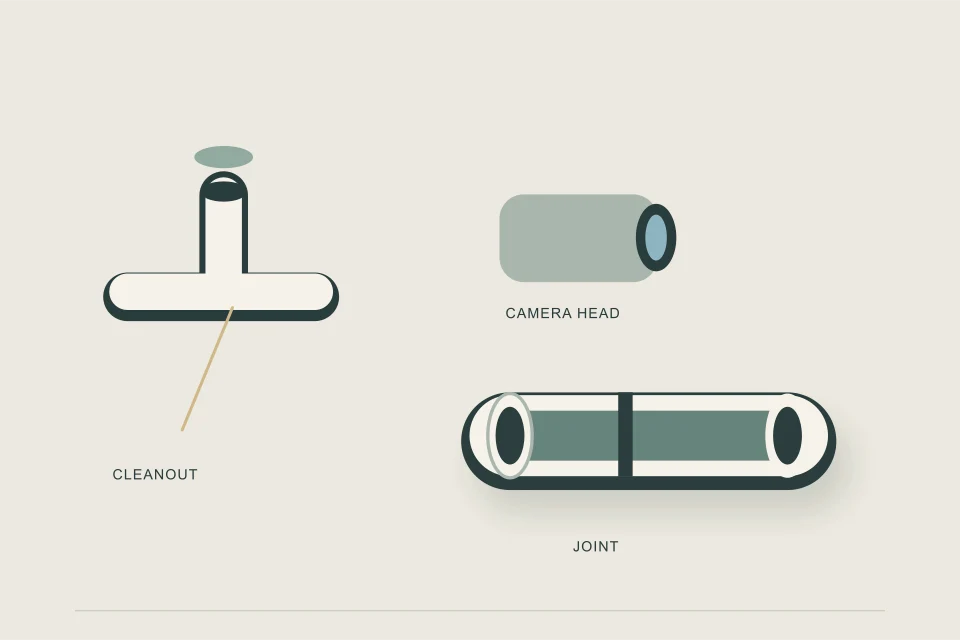
- An access opening associated with servicing or inspecting a drain. Tell the inspector what is known about its location and accessibility. Do not force a cap or alter an occupied property to turn uncertain access into a booking assumption.
- Clip
- A selected extract from a longer video that highlights an observation. Ask where it belongs in the original record and retain that original file. A short clip can be useful for discussion but may omit the route and surrounding context needed for review.
- Coverage limit
- The point or section beyond which the inspection provides no usable evidence. It may differ from the intended survey end. Ask for the reason and unseen portion to be stated beside the conclusion rather than interpreting a limited record as complete.
- Decision deadline
- The date by which the purchaser or owner needs to review usable evidence. Tell the provider before booking and confirm report delivery. An appointment date alone does not ensure there is time afterward to clarify a limited finding or seek another opinion.
- Distance reference
- The recorded travel reference used to find an observation in the video. Keep it connected to the entry point and direction. It helps a reviewer revisit the same interval but should not be substituted for surface locating before construction.
- Entry direction
- The direction of travel from the survey’s identified access point. Record it with distance references and the inspected asset. Different directions or starts can make recordings look unlike one another even when they concern related portions of the same property system.
- Finding
- A documented observation described by the reviewer and tied to its evidence. Ask where it appears and what the view could establish. Keep a finding distinct from the contractor’s repair recommendation and from a forecast about how long the pipe will last.
- Footage review
- An examination of existing camera records rather than necessarily a new site visit. Identify the files, purpose and later property events. A reviewer should state whether the supplied evidence answers the question or whether additional inspection is required.
- Inspection extent
- The section the camera actually surveyed, described with a start, direction and end or stopping point. Check whether that extent matches the request. Unseen downstream or upstream portions should remain explicit when a report is used for a purchase decision.
- Interpretation
- The reviewer’s explanation of what an observation may mean in context. Ask how it follows from the record and what uncertainty remains. Interpretation is different from a directly recorded fact, a surface measurement or an assessment of legal responsibility.
- Lateral
- A property’s sewer connection as described in its actual inspection scope. Ask which portion was reached and whether the route was confirmed. The word alone does not establish the legal responsibility boundary for a particular defect or section.
- Limitation
- A restriction on what the inspection can establish, such as incomplete access or an obscured area. The report should explain it plainly. A limitation is part of the result and should remain visible when findings are sent to another adviser or contractor.
- Locating
- A task specified to relate the relevant route or finding to a surface position. Ask which observation was located and what limitations were recorded. It is a different deliverable from a travel counter displayed on the inside-pipe camera recording.
- Offset joint
- A description of a joint whose alignment appears displaced in the viewed record. Ask the inspector to identify the interval and explain the observation’s significance. Do not translate the label directly into a method or price without a property-specific assessment.
- Original footage
- The preserved camera record supplied by the inspector, rather than only highlights shared afterward. Confirm how to download it and whether links expire. Store it with the written report so a future review can use the same evidence.
- Post-repair record
- Evidence obtained or supplied after defined work, linked to the repaired section and completion scope. Retain it beside the original inspection and invoice. Ask which additional authority inspections or tests the contractor must confirm; a camera file does not automatically replace them.
- Pre-purchase scope
- A camera service booked to inform a property-purchase decision. Its usefulness depends on practical coverage, reporting and the decision window. Confirm the service separately from other inspections and discuss unresolved findings with your own transaction advisers.
- Property record
- The retained set of inspection scope, original video, report, locating information and later work documents. Label later repairs and incidents separately. A clear sequence helps another reviewer understand which condition was recorded before a particular task was performed.
- Recommendation
- A proposed next action based on the reviewer’s assessment. Ask which observations support it and what further information is required. The proposal should not hide missing coverage or turn one unclear image into an unexplained requirement to replace an entire line.
- Repair assessment
- The contractor’s property-specific evaluation needed to define a practical repair scope and price. It may use inspection footage plus additional site information. A camera fee or defect label is not a complete construction proposal, utility assessment or restoration specification.
- Reported symptom
- A description of what an occupant noticed, such as a recurring slow fixture or backup. Preserve dates and affected locations without assigning a hidden cause. The symptom history helps frame the investigation but is different from an inspector’s documented pipe observation.
- Return inspection
- A later survey intended to resolve incomplete or unclear evidence from an earlier attempt. Ask what changed, what section is to be assessed and how the records will be connected. Do not file the unresolved item as complete before the later evidence exists.
- Root intrusion
- Roots described within the inspected pipe view. The report should identify location, extent and visibility limits. A repair decision needs the record’s context; neither a cleared passage nor an isolated root image establishes the appropriate method for an entire line.
- Second opinion
- A review of the evidence and question supplied to another qualified reviewer. Send the original video and report, not only a selected screenshot. Explain later events so the reviewer can distinguish a historical observation from a current-condition question.
- Standing water
- Water visible in the pipe under the conditions recorded. Ask how it affected the view and what context the inspector used in its interpretation. The image alone is not a measurement of the complete route’s grade or future performance.
- Still image
- A single frame used to illustrate a point in the recording. Request the corresponding video interval and interpretation. The image should support the original record, rather than replace continuous footage when route context or changing visibility matters to the question.
- Written summary
- The inspector’s account of the surveyed section, observations and limitations. It should connect material findings to the recording and distinguish recommendations. A concise summary can be useful without predicting a fixed pipe life or resolving questions outside the service’s actual scope.