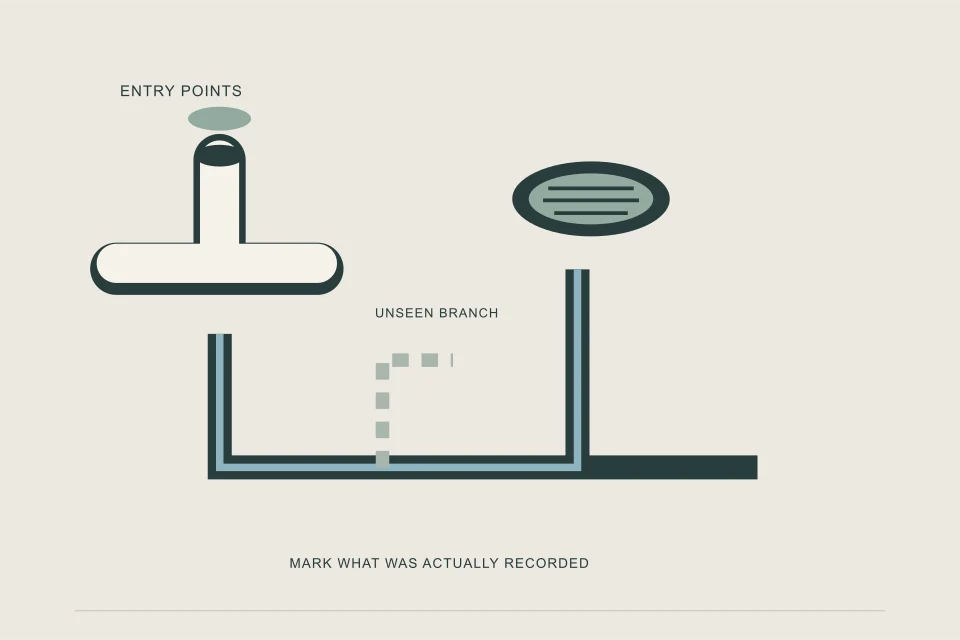
A sewer scope covers the route the camera actually records from its entry point under the inspection conditions. Agree the intended section before booking and ask for the confirmed endpoint and unseen portions afterward. Suitable access, permissions and an original recording matter more than an unsupported statement that the entire sewer was checked.
- Agree the intended route and entry before booking.
- Different branches and starting points need clear references.
- A stopped camera leaves a defined section unresolved.
- Review the coverage statement before interpreting findings.
01 /What does the camera entry point tell you?
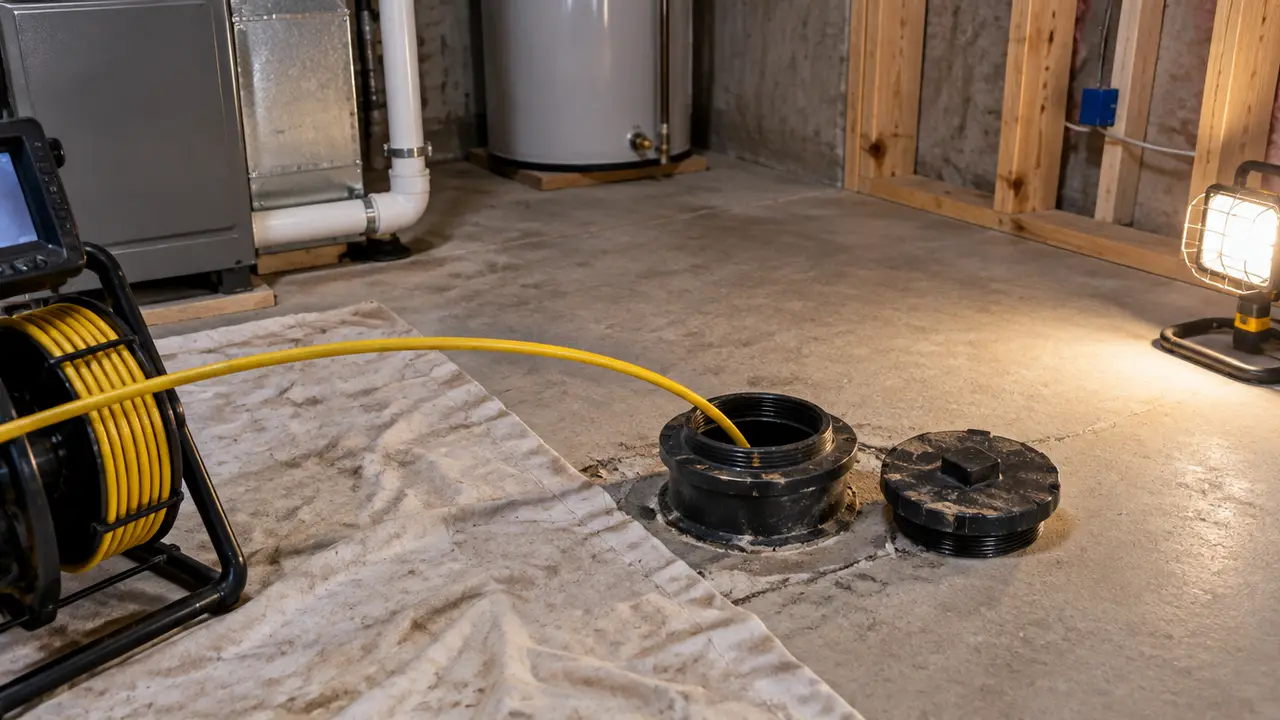
The entry point tells you where the survey begins, not that every drain at the property will be recorded. A cleanout, interior branch or another provider-assessed arrangement may lead into different parts of the system. State the route needed for your decision and ask the inspector how the planned entry serves it. An appointment described only as a sewer camera check leaves that important boundary unclear.
Give the provider confirmed access information and explain uncertainty. A previous invoice can identify where equipment was used, but it may not establish the route beyond it. A safe existing photo may help planning. Do not open a backed-up fitting, enter a pit or remove finishes to prove access for the enquiry. The qualified provider must assess practical entry, permissions and what the selected equipment can reasonably attempt.
02 /How are a building branch and an exterior connection different?
They are different requested sections even when they belong to the same drainage system. An interior branch serves part of the building; a building sewer or lateral connects the building toward its downstream system. Ask the inspector to identify which section is actually followed and whether the intended endpoint is reached. A recording from one fixture route should not be presented as evidence that every branch and exterior segment was surveyed.
NASSCO’s Building Sewer and Drain Inspection program focuses on private-property sewers and drains; its assessment programs distinguish different asset contexts. Use those references to ask for a suitable scope and reporting package, not to claim every ordinary appointment is certified. For a purchase, request the exterior coverage required for the decision separately from the general home inspection. For a managed site, provide the actual asset labels and permission contact.
03 /Which coverage fields belong beside the findings?
| Coverage field | Question to ask |
|---|---|
| Entry | Where did this recording begin? |
| Direction | Which route did the camera follow? |
| Intended endpoint | What section was the appointment meant to reach? |
| Actual endpoint | Was that point confirmed or estimated? |
| Interruptions | Where and why did recording or travel stop? |
| Visibility | Which wall or intervals were obscured? |
| Unseen assets | Which branches or remaining sections were not recorded? |
Read these fields before treating the report’s conclusion as applicable to the whole property. If they are missing, ask the inspector for clarification rather than interpreting the original file alone. A useful coverage statement can acknowledge an incomplete survey while preserving findings that were genuinely observed. The unseen remainder should stay explicit when the files are shared with another reviewer. For an illustrative purchase enquiry, a record ending at an unidentified junction leaves an endpoint question even if the preceding view is clear. Ask whether the junction was confirmed and what remains downstream. Keep that unanswered question beside the summary rather than treating a clean interval as evidence of complete coverage.
04 /Why can branches and bends complicate a survey?
Branches and bends can affect the practical route and the interpretation of a recording. The camera may follow one path while a different branch remains outside its view. Ask the provider to identify the known route and any ambiguity; do not assume every visible junction was entered. Keep the survey direction and starting reference with the video so another person can understand which way the camera approached an observation.
Equipment selection belongs with the qualified inspector’s assessment of the actual system. A homeowner should not choose a camera solely by its advertised cable length or infer complete reach from the amount of cable available. The service terms should explain what happens if travel cannot continue. If another pass starts from a different access, request its relationship to the earlier record rather than adding the displayed distances as if they measure one continuous path.
05 /What does a stopped camera leave unanswered?
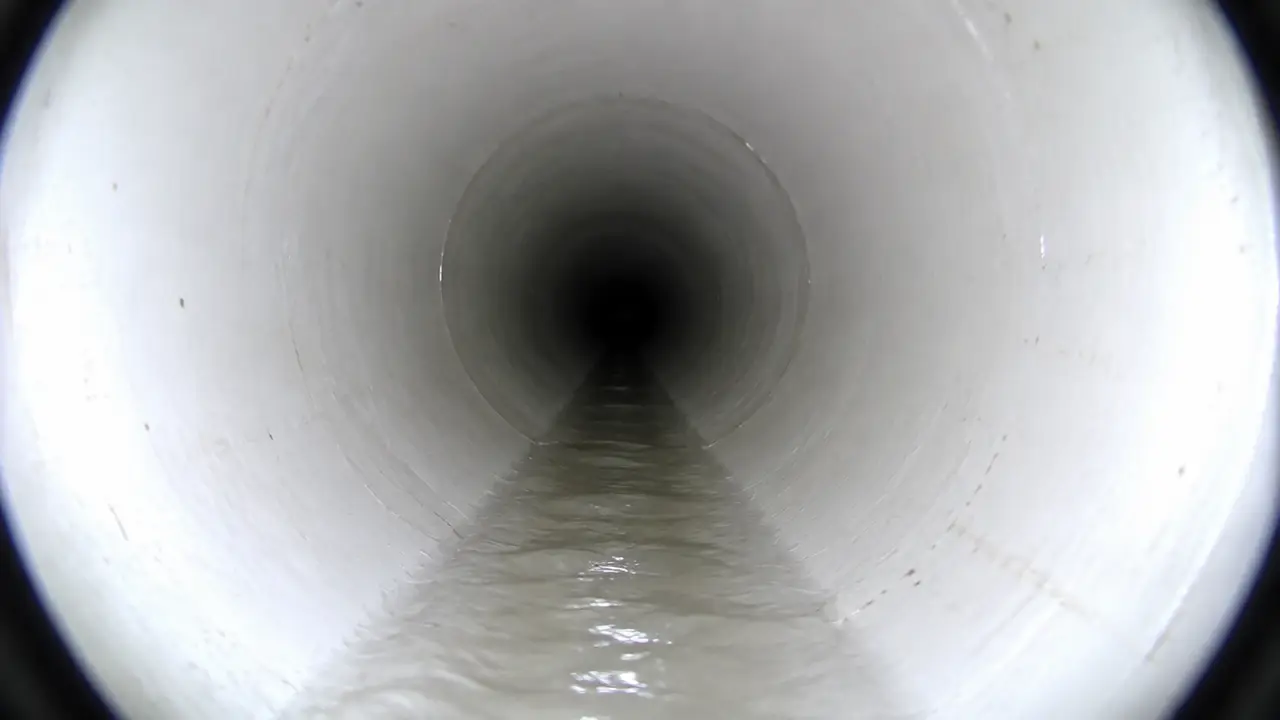
A stopped camera leaves the intended remainder unrecorded unless it is assessed by another defined method or access. The existing video may show useful evidence up to the limit, but it cannot establish the hidden section’s condition. Ask for the stop reference, reason and effect on the conclusion. A blockage, poor view or equipment limitation should not disappear behind a broad statement that the line was inspected.
Discuss the next task and what it is expected to reveal. Appropriate clearing, another entry or a return survey may be proposed after assessment. Keep its approval separate from the original appointment and retain recordings before and after intervening work. Do not deliberately create a blockage or run extra water to provoke a demonstration. During an active backup, appropriate assistance takes priority; the later coverage question can be addressed once the immediate situation permits a planned survey.
06 /How should a second entry or return visit be recorded?
Record the second entry as its own survey reference and explain how it relates to the first. State the date, route direction, starting point and intended missing section. If cleaning or repair occurred between visits, identify that change. The two files should be connected by evidence, not simply placed in one folder and treated as a continuous inspection. Ask which gap the second pass actually closed.
For a purchaser or owner, review whether the final packet now answers the original question. An additional visit may improve coverage without resolving every uncertainty. Keep incomplete branches or visibility limits visible. If the decision depends on a physical repair position, locating is a further reference rather than something supplied automatically by combining camera counters. The report checklist can help you separate recording coverage, visible condition and the information a later contractor still needs.
07 /How do you request coverage that supports your decision?
Use the inspection builder to state the reason, property context, known access and files held. Continue to the quote form and edit the actual route question, deadline and permissions before sending with consent. Ask the responding provider to confirm expected extent, deliverables and incomplete-attempt terms. The tool’s illustration does not measure or assess your buried system.
When the record arrives, keep its coverage statement beside the original video and written findings. Ask for a correction if the summary implies more than the actual extent supports. NASSCO quality guidance provides a professional reference for specified assessment work; it does not replace the scope agreed for your visit. A clear boundary is useful evidence: it helps another reviewer identify a remaining task without guessing which sections a confident headline included.
FAQQuestions people ask
Does a camera scope inspect every drain in the house?
Only the routes actually included and recorded form part of the survey. Ask whether the requested exterior connection, interior branches or shared assets are covered. The report should identify entry, extent and unseen sections. Do not infer whole-property coverage from one video link or the fact that equipment entered through a fixture inside the building.
What if the inspector cannot reach the sewer main?
Request the stopping reference, reason and remaining extent. Ask whether another task can address the gap and have its terms confirmed separately. The file can still contain useful observations, but the intended remainder is unresolved. Keep that limit with the report and decision record instead of accepting a complete-survey description unsupported by coverage.
Can a different entry point solve incomplete coverage?
It may be an option after a qualified assessment, but it should not be promised from the menu or a diagram. Ask what route the alternative could reach and which uncertainty it would address. A later recording needs its own start reference and relationship to the first. Retain both files with any intervening work identified.
Should I expose hidden access before asking for a scope?
Describe what is known and ask the provider how it assesses access and additional work. Do not open a backed-up cap or create a hazard to complete an online choice. Confirm who can authorize any necessary preparation and restoration. An unknown entry point is useful information when clearly stated in the request.
NETWORKGo deeper across the HAUSE Sewer network
Can a sewer scope cause problems? The real risks and how to avoid them
Can a sewer scope cause an issue? The real risks of a camera inspection: toilet reset leaks, seized cleanout plugs, stuck cameras, odours and who pays.
SewerRoots.caRoot Risk Calculator
Root Risk Calculator: enter tree species, distance to the sewer line, pipe material, age and root history to get a risk band, the reasons and next steps.
PipeCleaning.caWhat drain cleaning is, and what a pipe cleaning service actually does
What is drain cleaning? What a pipe cleaning service does on a visit, whether it counts as plumbing, who can do it, and how to choose a service near you.