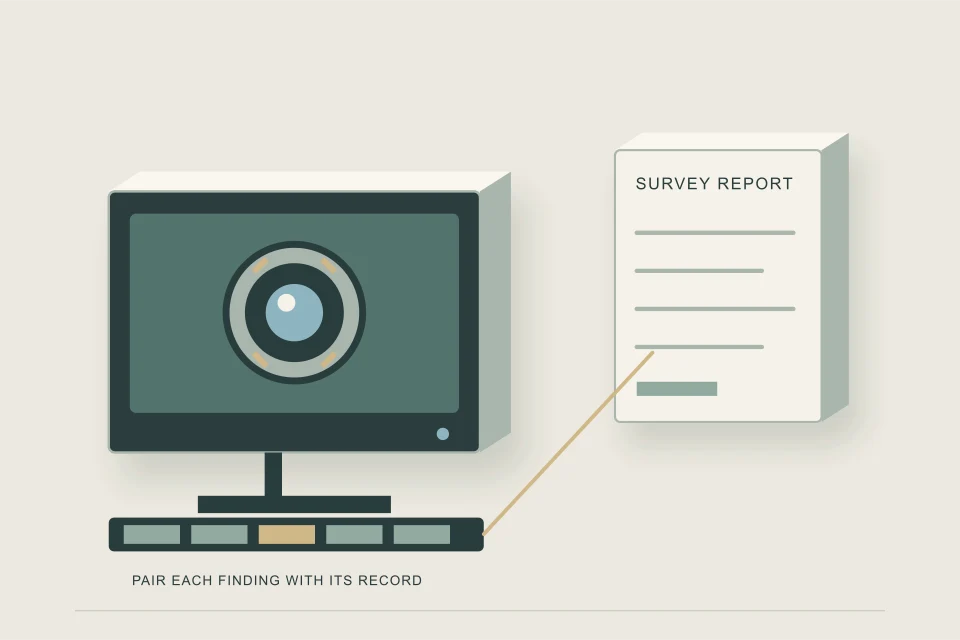
A useful sewer report identifies the inspected property and route, the access point, the visible extent, observations with locations, the recording and any limitations. Ask the inspector to distinguish what the camera shows from what they recommend. The report should let another qualified person find and review the same evidence.
- Read the route and limits before the conclusion.
- Connect each important finding to a video interval and distance reference.
- Specify original files and the reporting format before booking.
- Keep observed condition, interpretation and recommended work distinct.
01 /Define the inspection record
| Record item | What to check |
|---|---|
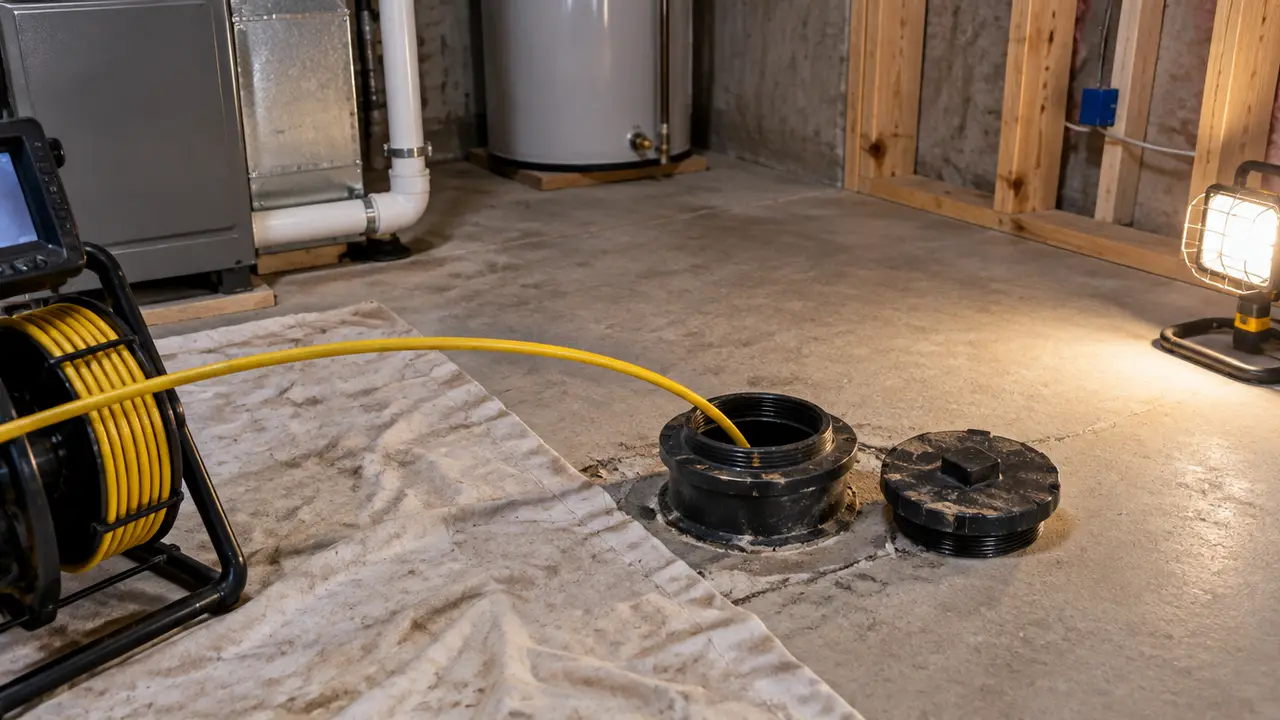
| Route and access | Where the camera entered and which drain or lateral it followed |
| Extent | Confirmed end point and any uninspected section |
| Observations | Description, distance and supporting footage interval |
| Limitations | Water, deposits, obstructions, access or equipment limits |
| Next step | Cleaning, further investigation or repair assessment with reasons |
A video link can expire. Ask how the original file is provided and retained, and save your own copy with the written report. Keep a property identifier and date in the file name so an older survey is not mistaken for a current one.
02 /Keep observations separate from the proposed repair
The words “roots” or “belly” are a starting description, not a complete diagnosis. Request the affected distance, apparent extent and any visibility limit. A camera may see the inside of a pipe without measuring every condition outside it.
If a quotation cites a structural defect, the report should show the supporting observation. Ask which further information the proposed method needs: location and depth, access, bends, service connections or a clearer view after cleaning. A confident recommendation can still have unresolved scope assumptions.
03 /Match the reporting format to the user
A homeowner may need an understandable summary and video. A commercial owner, engineer or asset manager may require a specific coded format and asset inventory. Confirm that requirement before booking; it is difficult to reconstruct missing identifiers after the technician has left.
There is no universal report template on this site. Use the checklist as a discussion aid and specify the actual deliverables in writing. A report is most useful when it helps the next person reproduce the observation rather than simply trust a conclusion.
04 /What question should the report be able to answer?
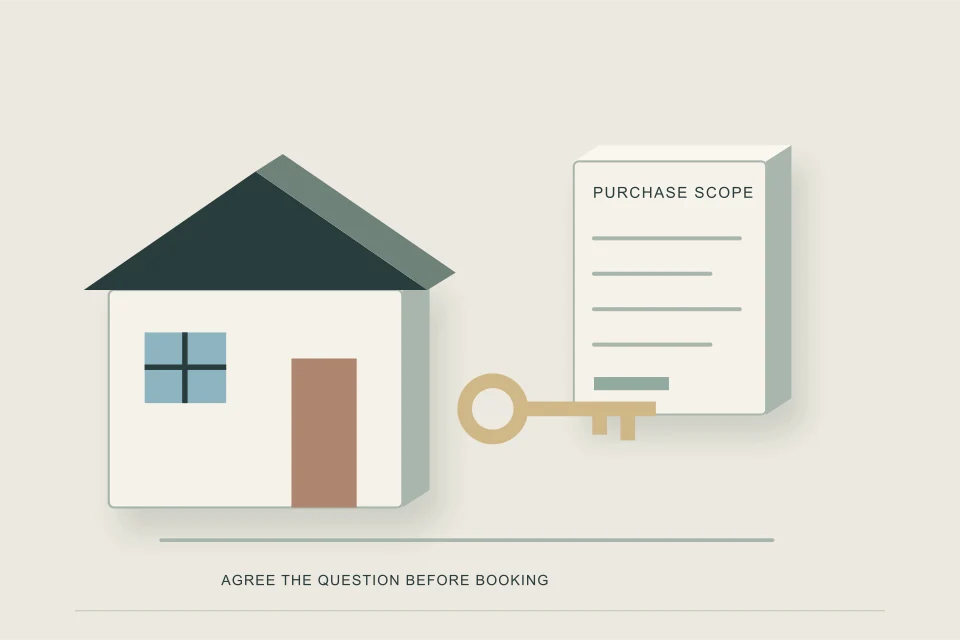
The report should answer the agreed inspection question using the section actually surveyed. A buyer assessing an underground connection, an owner investigating recurrence and a manager documenting repaired work need different context. Put that purpose in the booking brief and retain it beside the result. A technically detailed recording can still be unhelpful if it follows a different route or arrives after the decision deadline.
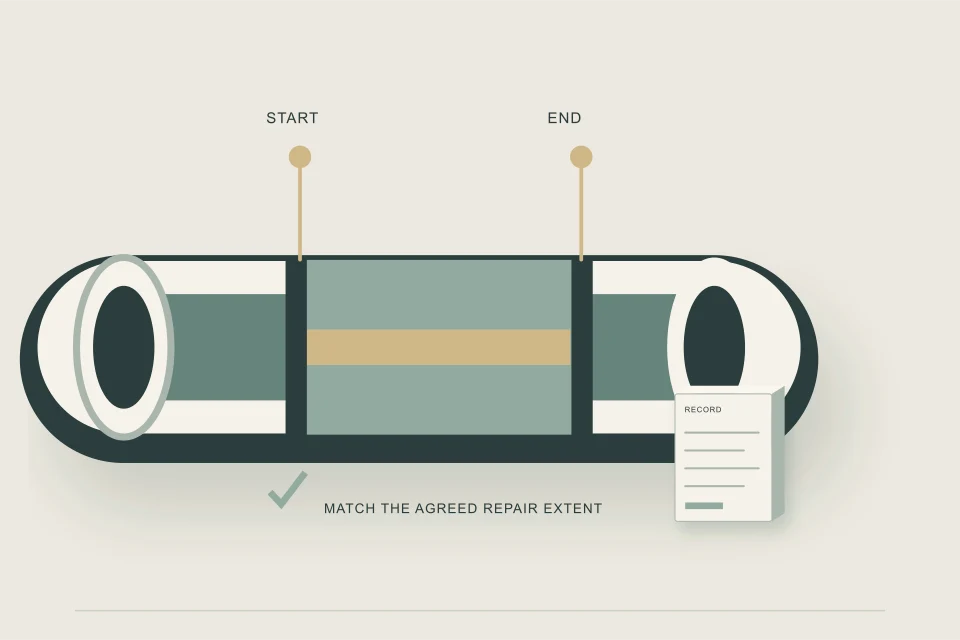
Start your review with identity: property, date, access point, survey direction and intended endpoint. Ask whether the endpoint was reached or merely estimated. Where the route was assumed from an old plan, the report should make that assumption visible. Read the conclusion only after those boundaries are clear. The same observation can mean something different when it belongs to a short interior branch rather than the exterior connection you expected to inspect.
05 /How should distances and video times be connected?
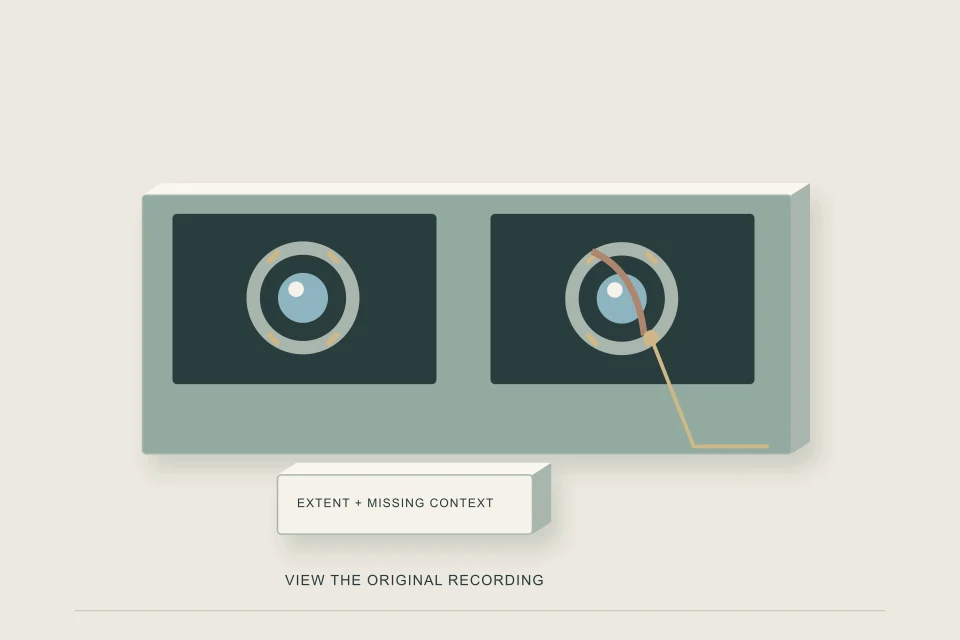
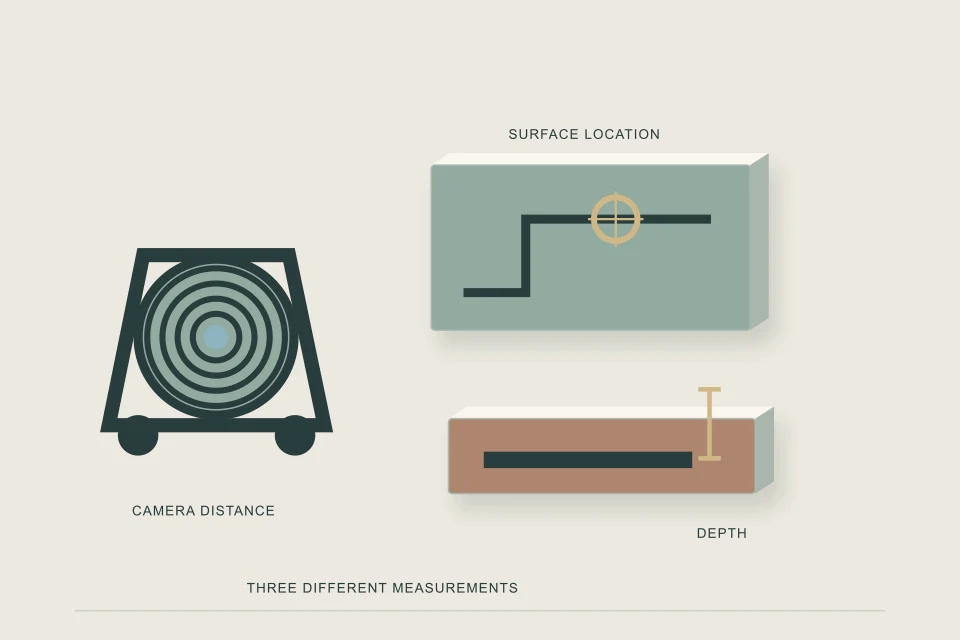
Use distance and recording time as references to find an observation, not as interchangeable measurements. The footage counter relates to the camera’s starting reference and travel; the time identifies a position in the recording. Ask the inspector to state the start reference, units and any reset. If an observation is important to a proposed task, another reviewer should be able to find the relevant interval without replaying an unlabeled file and guessing.
A camera distance alone does not establish a surface excavation point or burial depth. Ask whether locating was performed, what was marked and which uncertainty remains. Keep that locating record distinct from the video reference. If a second survey starts from another entry, request the relationship between the two records rather than comparing the counters directly. A route sketch with confirmed and assumed elements can make this much easier to follow.
06 /How can you audit a report without diagnosing the pipe yourself?
| Check | Useful evidence | Question when missing |
|---|---|---|
| Identity | Property, date and consistent file label | Which visit and asset does this describe? |
| Route | Entry, direction and stated endpoint | Was the requested exterior section reached? |
| Observation | Description linked to time and distance | Where can the next reviewer see this? |
| Visibility | Water, deposits and inaccessible portions recorded | What could not be assessed? |
| Recommendation | Reason and prerequisites for the proposed task | Which missing fact could change the method? |
| Delivery | Original video and understandable written summary | Can the owner retain a usable copy? |
Mark a missing field as a clarification request rather than treating it as proof of poor workmanship. The provider may hold information that was omitted from the summary. Ask for the record to be corrected or supplemented in writing. If the answer depends on a new site visit, have that visit scoped to the unresolved question instead of quietly treating an incomplete file as a complete assessment.
07 /What does a report mean by limited visibility?
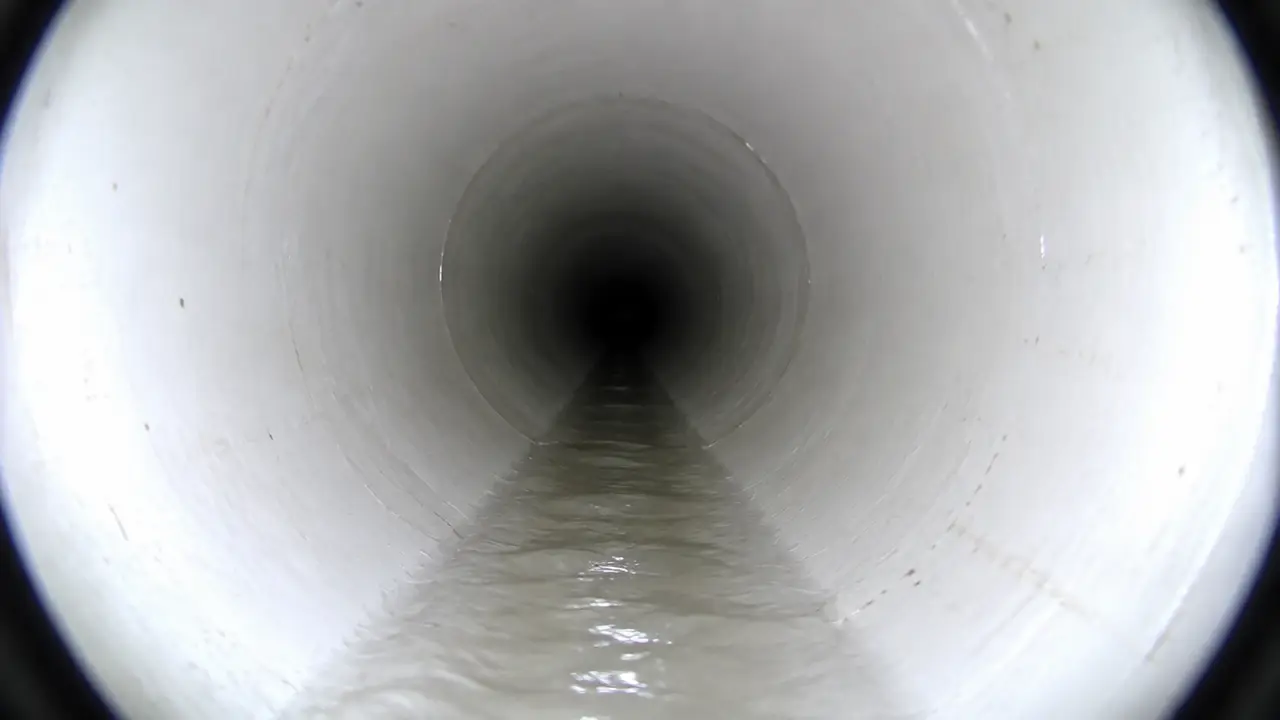
Limited visibility means the camera record cannot support a complete description of the affected view. Water may hide part of the wall, deposits may obscure a joint, or an obstruction may stop travel. Request the location and extent of that limitation, and ask how it affects the conclusion. A file can contain useful evidence before the stopping point while still leaving the intended remainder unknown.
Separate “not observed” from “confirmed absent.” If the camera never entered a branch, the report cannot establish its condition from the main route’s appearance. If cleaning changed the view, retain the pre-work and post-work records with dates and task descriptions. The report should explain which interpretation belongs to which survey. Do not assume that a clear-looking still image represents the full circumference, the entire run or conditions outside the pipe.
08 /When is a standardized coded report useful?
A coded report is useful when the intended reviewer needs a consistent condition-data format. NASSCO provides assessment programs for pipelines, laterals and manholes, and a separate Building Sewer and Drain Inspection program for private-property drains and sewers. Ask the reviewer which package is required and the provider which it can deliver. These programs are references, not a claim that this portal or every responding contractor is certified.
For a homeowner, plain explanations and correctly identified original video may be the practical priority. For a managed network, asset identifiers, agreed coding and compatible delivery may matter more. Set those requirements before the crew visits. Do not commission a formal format only because an abbreviation sounds reassuring, and do not assume an ordinary narrative report can later be converted into information that was never captured. Confirm the provider’s actual credentials where the scope requires them.
09 /What should you ask before accepting a repair recommendation?
Ask what observed condition supports the recommendation and which further facts its method needs. A report can identify a visible concern without settling every construction question. Location, access, connected branches and an obscured remainder may still need assessment. Request a connection between the reported finding and the proposed repair limits. A recommendation should not quietly expand from one recorded interval to an entire unseen route.
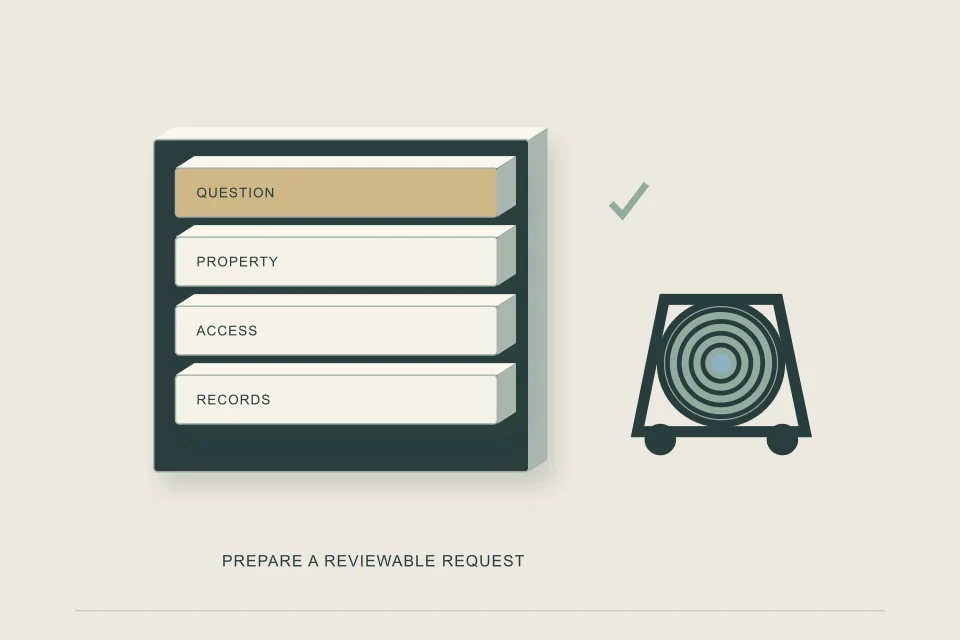
Keep the report independent of the approval record: what was observed, what was interpreted and what work you chose. If two providers disagree, give the reviewer the original recording and their specific reasoning. Use the footage-review guide to prepare that question. The inspection scope builder carries an editable outline into a private request; it does not generate a property condition report from the illustrative model or reserve an inspection appointment.
FAQQuestions people ask
Is a video without a written report enough?
It depends on the agreed purpose and deliverables. A buyer or owner still needs a clear route, coverage statement, findings and limitations to use the recording responsibly. Specify the written summary before booking. A video is valuable supporting evidence, but an unlabeled file may leave another reviewer unable to tell which section was inspected or why the camera stopped.
Does a report prove the pipe will last another decade?
A recorded survey documents visible condition under the stated inspection conditions. It does not establish a dependable expiry date for the whole system. Ask what the observations support and what remains unknown before using a future-life claim in a purchase or repair decision. Separate documented findings from forecasts, the contractor’s commercial terms and any further assessment it recommends.
Should the report include photos as well as video?
Stills can make a finding easier to locate in a written summary, provided they are tied to the original recording and route. They should not replace context when motion, visibility or the approach to an obstruction matters. Agree the deliverables in advance and keep the original quality file. A cropped photo on its own may omit the information another reviewer needs.
What do I do if the report contradicts the quote?
Identify the exact inconsistency and ask the provider to reconcile it in writing. For example, the quoted repair limits may extend beyond the inspected section or depend on a location not recorded. Keep both versions and the clarification with the property record. If the missing evidence would change the decision, request a defined investigation or qualified second opinion before authorizing that construction scope.
NETWORKGo deeper across the HAUSE Sewer network
How long a sewer scope takes, from booking to the report
How long a sewer scope inspection takes: typical time on site, what adds time, how far ahead to book, and when to expect the video and the written report.
SewerCleaners.caCondo and multi-family sewer cleaning programs
How condo boards build a sewer cleaning program: stack cleaning, building drains, camera baselines, reserve fund planning, bylaws and resident notices.
SewerRoots.caWhat tree roots in a sewer line look like, on camera and on the cable
What tree roots in a sewer line look like on camera: fine roots, tap roots and root balls, PACP codes, look-alikes like grease, and what cut joints show.