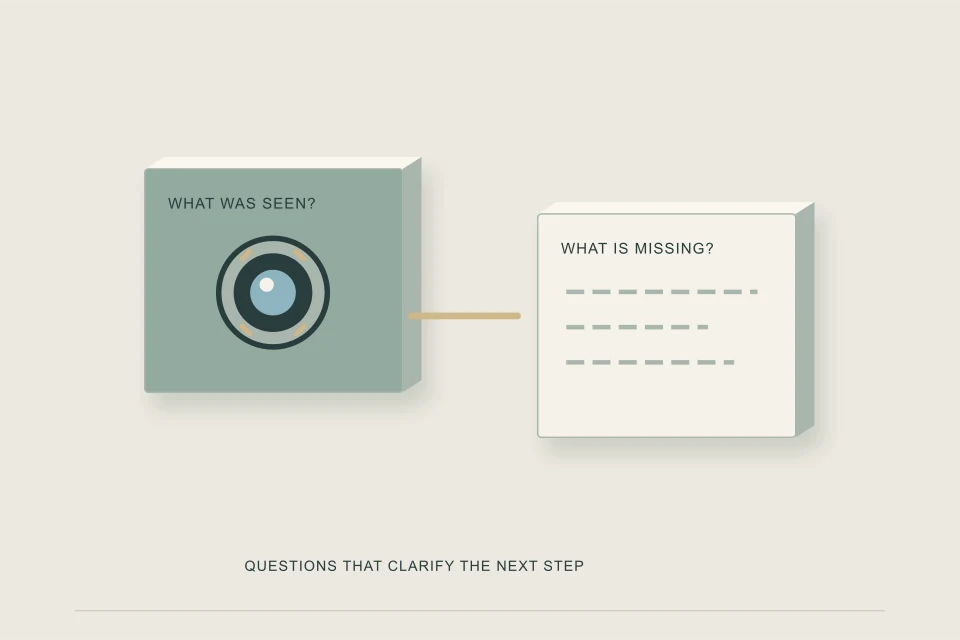
A pre-purchase sewer scope should answer what was visible in the inspected drain and lateral, where the camera reached, what findings were recorded and what remained unseen. Agree on access and deliverables before booking. A clear-looking sample is not evidence that the whole underground line was inspected.
- Book the sewer scope and its deliverables explicitly; do not assume another inspection includes it.
- Ask when the original recording and written summary will arrive relative to your decision deadline.
- Keep the surveyed extent and unseen sections beside the findings.
- Treat repair pricing, legal responsibility and future performance as separate questions.
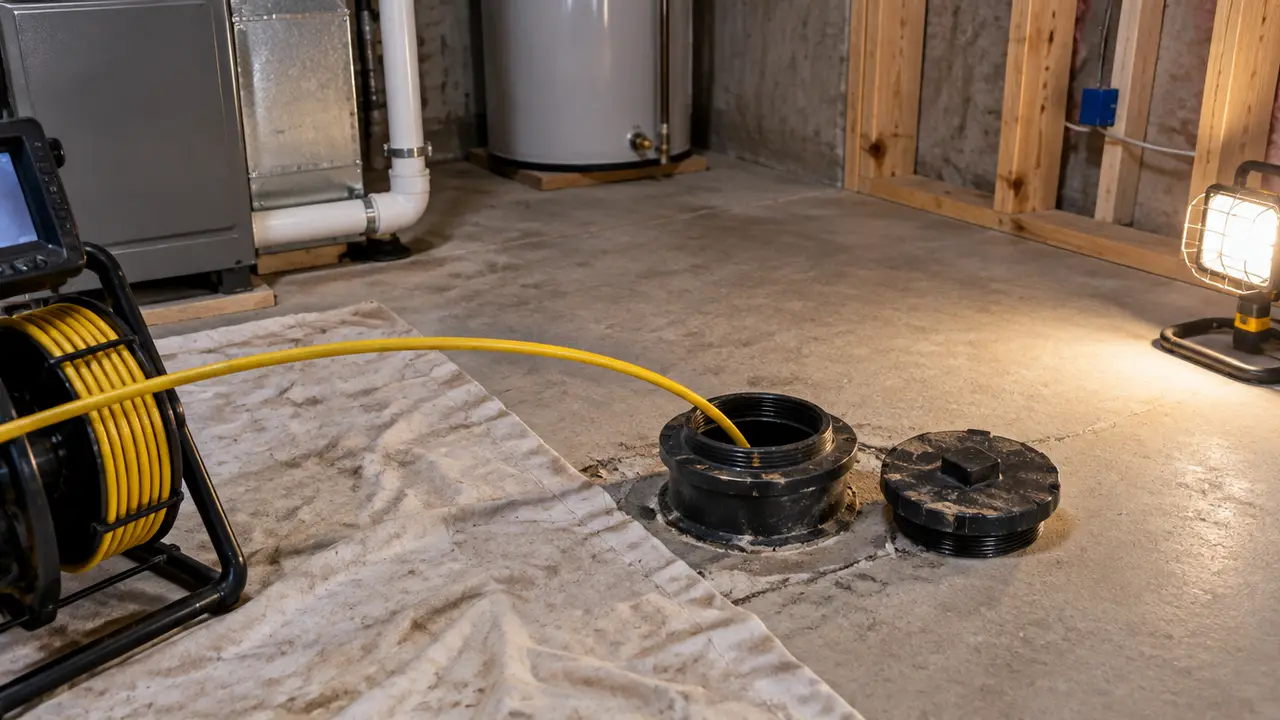
01 /Start with the purchase timeline
Tell the inspector your decision deadline and the property access arrangements. Confirm that the person allowing entry has authorized it. A sewer scope is a separate inspection task; do not assume the general home inspection includes a recorded underground sewer survey.
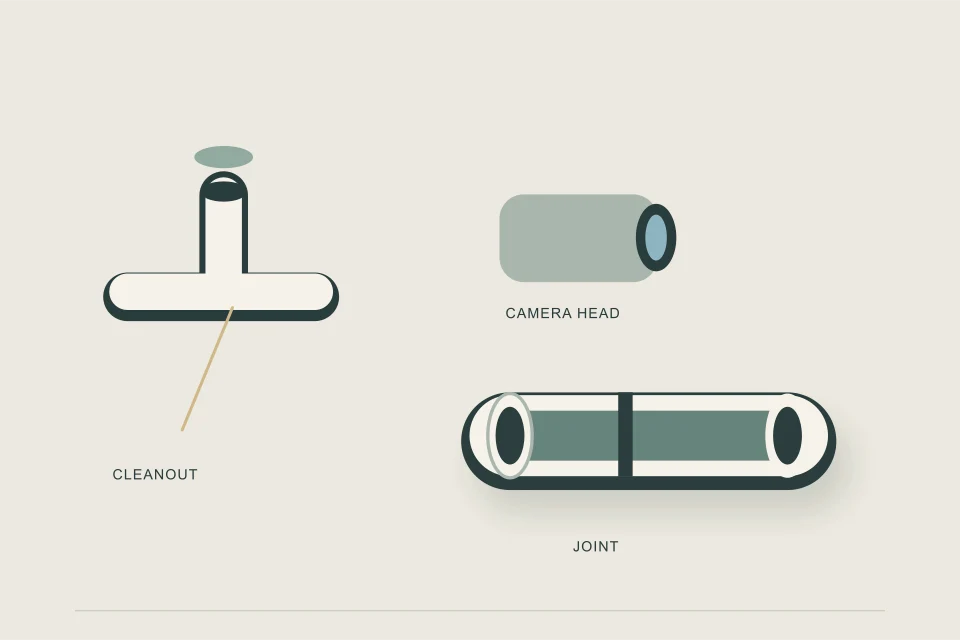
Ask where the camera will enter and what happens if access is blocked. A buried cleanout, an unsuitable entry point or standing water can limit the inspection. Agree on any additional work before it is attempted and have the limitations included in the report.
02 /Ask for footage and context
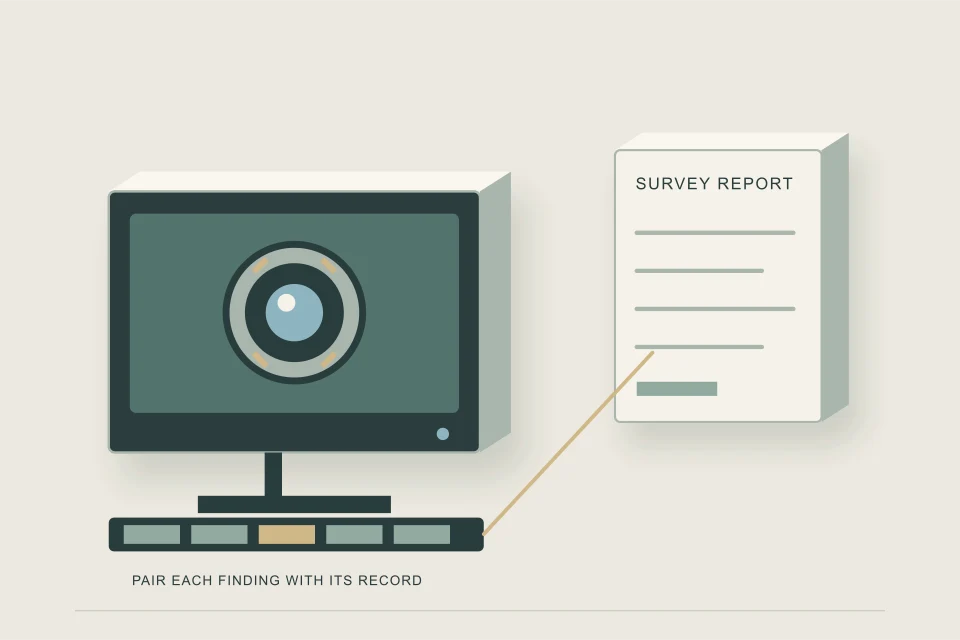
Request the original video with distance references, a written summary and the inspector’s description of the route. Ask whether the visible end point was confirmed or inferred. A recording that stops short of the intended limit leaves part of the question unanswered.
Read observations separately from predictions. Roots, deposits or a displaced joint deserve a location and description. They do not by themselves tell you the exact repair price, ownership boundary or remaining life of the pipe. Those decisions may need further locating, cleaning or a repair assessment.
03 /Use findings in the decision
If a finding matters to the purchase, collect the specific footage interval and a written question before seeking a contractor opinion. Ask whether cleaning could make the condition visible, whether a spot repair is plausible and what remains uncertain. Keep any quote tied to the actual scope.
Do not treat a limited or inaccessible inspection as a pass. The useful conclusion may be that part of the line could not be assessed within the available access. Discuss that uncertainty with your own purchase advisers; this portal does not provide contract or legal advice.
04 /How do you define a pre-purchase scope before booking?
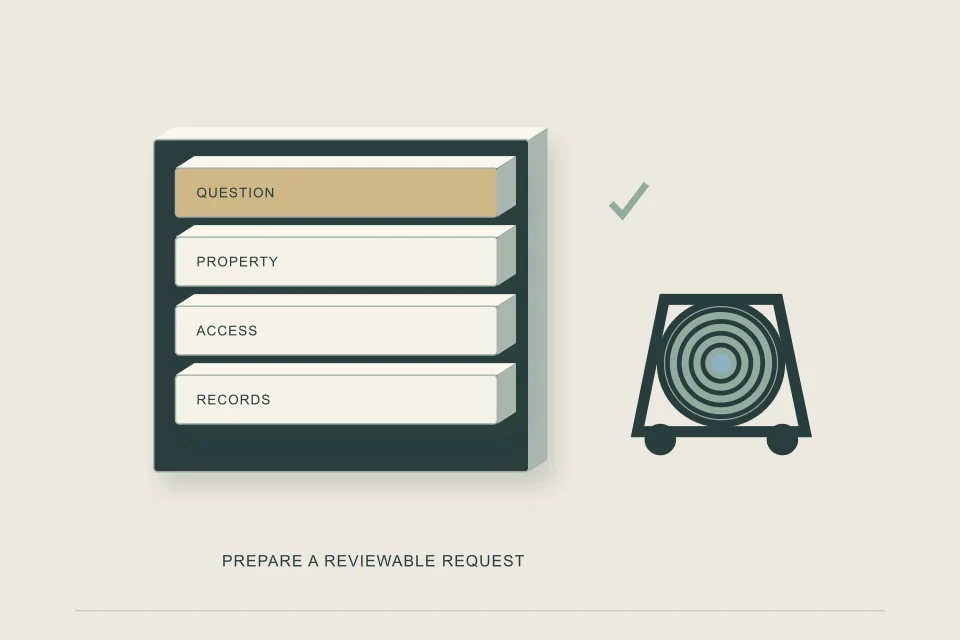
Define the appointment around the property, the intended surveyed section and the decision deadline. Start by confirming that you are booking an underground sewer camera service, not assuming it accompanies another inspection. Ask the provider to describe the proposed entry point, expected route and reporting package. If it cannot confirm the practical coverage until arrival, have that uncertainty recorded in the booking terms.
Make the access arrangements through the person authorized to allow the inspection. Explain whether the property is occupied, how the inspector will enter and who can approve additional work. A visible cleanout is useful information, but a buyer should not force a cap, move occupied-property belongings or authorize alterations without permission. Tell the provider what is known and what has not been checked. That is a clearer brief than guessing which entry point will be usable.
Tell the inspector when you need the recording and written summary, and ask for its actual delivery commitment. An appointment before a purchase deadline is less useful if the evidence arrives after the decision has been made. Have time for a question about an unclear finding where possible. This guide does not prescribe a contract condition or advise whether to waive one; those are discussions for your own transaction advisers.
Agree what happens if the survey is incomplete. Ask whether the base price covers an attempted inspection, whether a second access point or cleaning is extra and how further work is authorized. A provider should be able to state the limits of the booked service without promising that every property can be fully surveyed in one visit. Keep the answer in writing so an incomplete appointment does not become an unexpected disagreement.
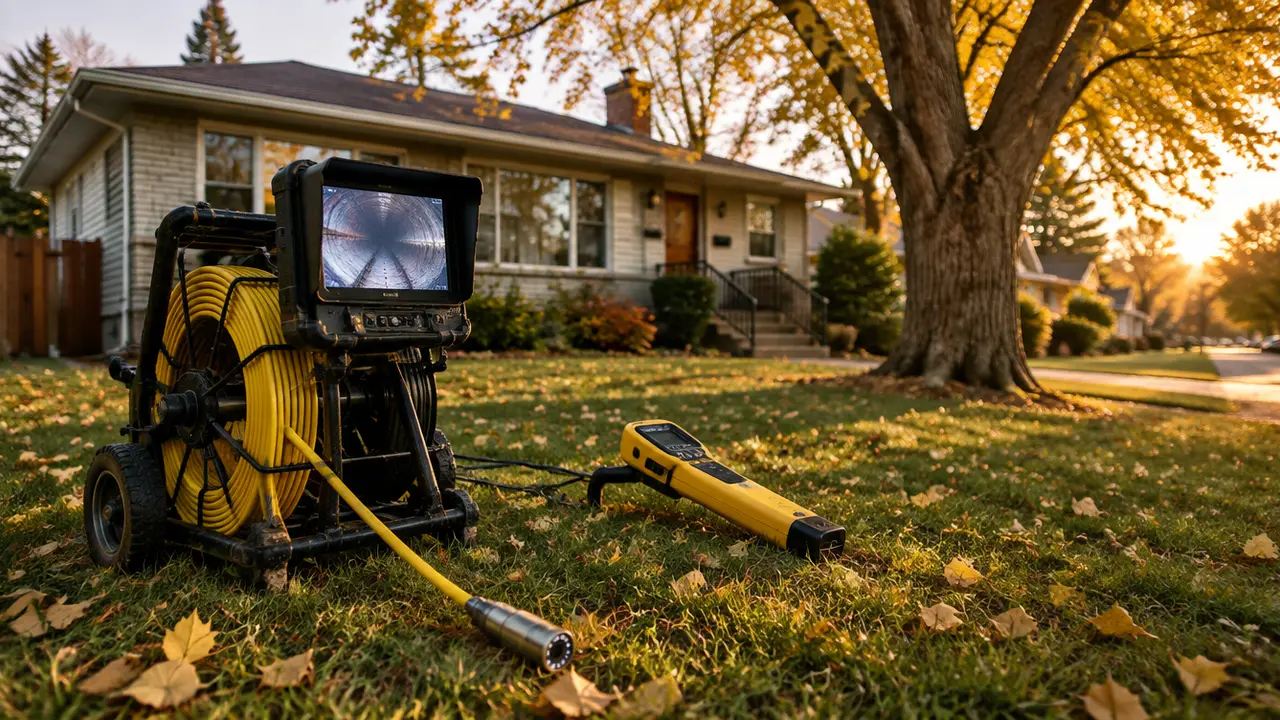
05 /What do footage, written findings and locating each tell you?
Footage records the view obtained inside the surveyed pipe; written findings explain observations and limits; locating, when separately performed, relates a finding to a surface position. Ask which of those deliverables are included. They complement one another, but they should not be treated as interchangeable. A video counter without a described route is harder to interpret than a recording tied to a known start, direction and end point.
Request the original continuous recording and the inspector’s written description of the extent reached. Ask for references to the intervals supporting each material finding. A still image or short clip may summarize an observation, but retaining the original file allows a later reviewer to consider context and changes in the view. Confirm whether the file can be downloaded and whether an online link will expire. Keep a property-record copy rather than relying solely on a link in an email.
If a proposed repair depends on the position or depth of a finding, ask what additional locating is needed and how its accuracy and limitations will be described. Do not translate a footage distance directly into a digging position yourself. A pipe route may differ from the assumed route in an old drawing. The inspection should identify what is observed and what remains inferred, so a later contractor can see the basis for its site assessment.
A report should also say what the inspection cannot establish. It does not by itself resolve a legal ownership boundary, establish future performance or measure every condition outside the camera’s view. Ask the reviewer to distinguish its interpretation from a measured or directly observed fact. If the entire line was not reached, that missing coverage belongs beside the conclusion, not in a footnote that disappears when a repair estimate is forwarded.
06 /How should you respond to roots, water or an offset joint?
Respond by asking for the location, extent and context of the observation before treating it as a repair verdict. An image is evidence of what was visible at that point in the recording. The reviewer should explain how it relates to the question you booked the survey to answer. Ask what was visible around the finding and whether the inspection conditions affected that view.
For roots, ask whether the original view was partly obscured and whether a further view after appropriate clearing would answer an unresolved condition question. Do not assume a cleared passage proves the pipe structure is sound, or that any root image automatically requires full replacement. The method decision should be tied to the property-specific evidence and a qualified repair assessment. Keep the inspection record available when comparing those options.
For standing water, ask how much of the run could be seen and what further evidence would be needed to interpret it. A camera image alone is not a survey of the complete pipe grade. For a displaced joint or visible break, ask the reviewer to identify the exact recording interval and explain what its observation supports. Avoid converting an illustrative defect name into a precise remaining-life prediction or a fixed repair cost.
If the report says the view was limited, treat that as an unresolved question. Ask what a practical next investigation would reveal, whether it can occur within the access and decision window, and what its limits would be. A second opinion is most useful when the reviewer receives the original evidence and a defined question. The existing-footage review guide explains how to prepare that request without rewriting the first report as a new survey.
07 /How do you compare a repair proposal with the inspection?
Compare the proposed repair against the specific inspected finding and the uncertainties still outstanding. Ask the contractor to identify the section its proposal covers, the record it used and the site checks required before final pricing. A camera observation can support a repair discussion without supplying all the access, excavation, utility or restoration information needed to quote the finished job.
Have the proposal separate investigation from construction. Additional locating or clearer footage may be needed before the provider can confirm the method. Ask whether the proposed work addresses one visible defect, several findings or an entire run, and why that coverage is appropriate. Keep reasonable alternatives and their limitations in the comparison. A smaller quoted scope and a larger quoted scope are not equivalent products merely because each says “sewer repair”.
Identify restoration and completion evidence before approving any work. If the repair affects a driveway, landscaped area or building access, ask how those items are treated in the written scope. Ask what post-work recording or other completion record will be supplied, and which separately required authority inspections or tests the contractor will confirm. The post-repair inspection guide helps formulate the evidence request; it does not replace the contractor’s project specification.
Keep purchase negotiations and professional advice separate from this technical comparison. The useful output from the inspection is a record of observations, coverage and limits. It is not a promise that a seller must pay a particular amount or that an insurer will cover the work. Share the relevant records with your own advisers and ask them how the uncertainty affects the decision you actually need to make.
08 /What belongs in your final property record?
Retain the booking scope, original video, written report, any locating record and the questions answered afterward. Give the files clear names so the surveyed property and date can be identified without guessing. Keep later cleaning or repair invoices with that set, but label them as later events. This preserves the distinction between the condition documented during the purchase and work performed after it.
Before the decision deadline, make a short coverage note: what was surveyed, what was found, what remained unseen and which next step was proposed. If there are unresolved items, write them explicitly. A useful inspection result can be “the downstream section could not be assessed” rather than a pass or fail label. Carry those items into the inspection scope builder if you need a further provider review.
For a backup or unsafe site encountered during the visit, prioritize appropriate assistance and safe access. Calgary’s 311 service can assess possible municipal infrastructure involvement in a backup. Avoid contaminated areas and wet electrical equipment, and do not open confined-space access to help the camera reach farther. Rebooking or reporting incomplete coverage is preferable to treating hazardous access as a routine part of a purchaser’s inspection task.
FAQQuestions people ask
Is an underground sewer scope included in every home inspection?
Do not assume so. Confirm the camera service, access and reporting package separately in writing before booking.
What if the inspector cannot reach the full intended line?
Ask for the surveyed extent, reason it stopped and missing section to be recorded. Discuss whether further access or investigation is practical; an incomplete survey is not a complete pass.
Can camera footage give a final repair price?
No. A contractor needs the relevant evidence plus its own assessment of access, method, utilities and restoration to price the actual scope.
Should I keep the original sewer inspection video?
Yes. Request a downloadable original recording and retain it with the written report and later work records, rather than relying only on a short clip or expiring link.
NETWORKGo deeper across the HAUSE Sewer network
Should you scope the sewer before buying a house?
When a sewer scope before buying a house is worth it, which homes need one most, how to fit it inside a condition period, and what to do with the result.
SewerRoots.caRoots found in the sewer line during a home inspection: what to do next
Roots found in the sewer line at a home inspection or sewer scope? How to read the finding, get repair quotes before conditions expire, and negotiate.
SewerQuotes.comSewer camera inspection cost, and what the fee should include
Sewer camera inspection cost in Canada for 2026: standalone, pre-purchase and add-on scope prices in CAD, what a proper report includes and when the fee is wasted.