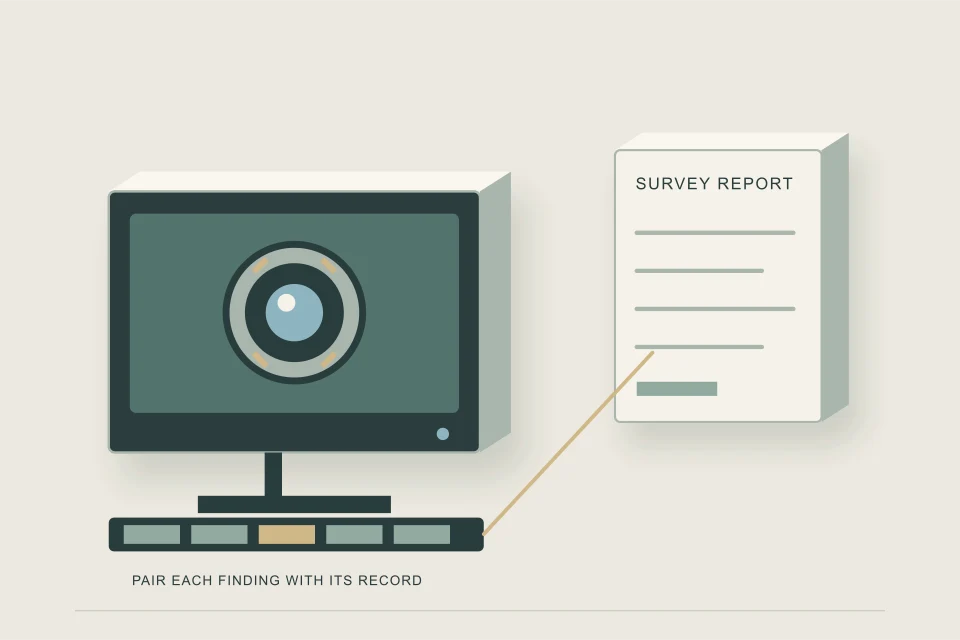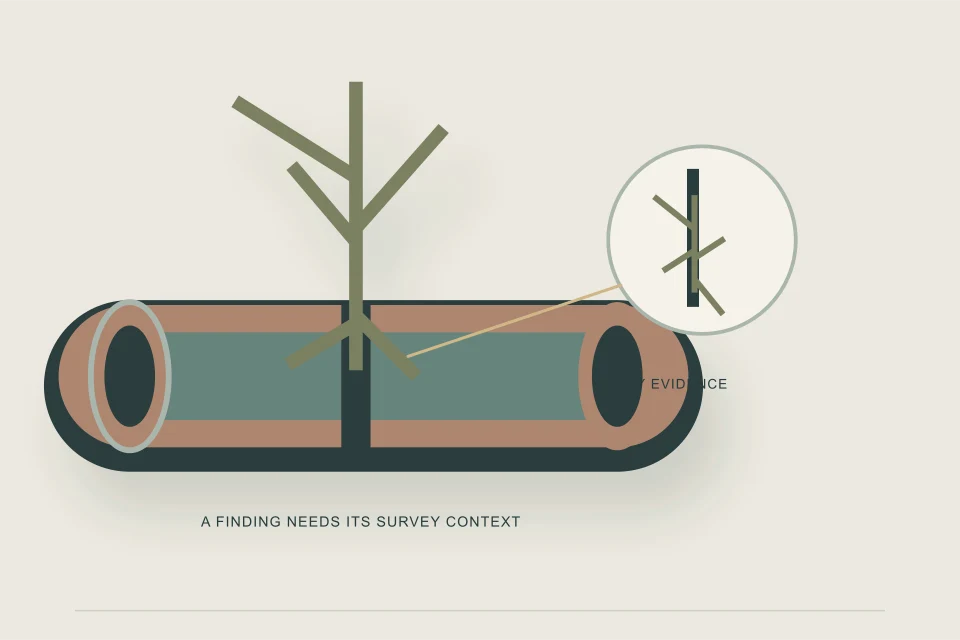
Water visible in sewer footage is an observation that needs route and inspection context. It can obscure the wall and leave the cause or extent unresolved. Ask which interval is affected, what the provider actually measured and how the finding supports its next step. A dark image alone does not establish a sag or choose a repair.
- Describe visible water before assigning its cause.
- Keep the affected interval and viewing conditions with the finding.
- A camera image is not a complete grade measurement.
- Ask which further evidence would change the decision.
01 /What is actually observed when the camera shows water?
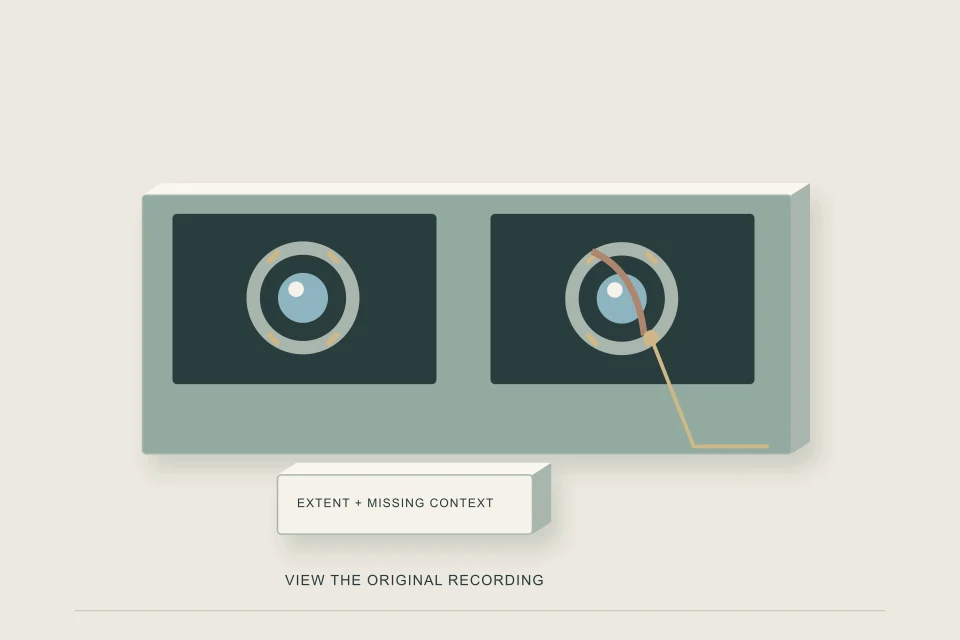
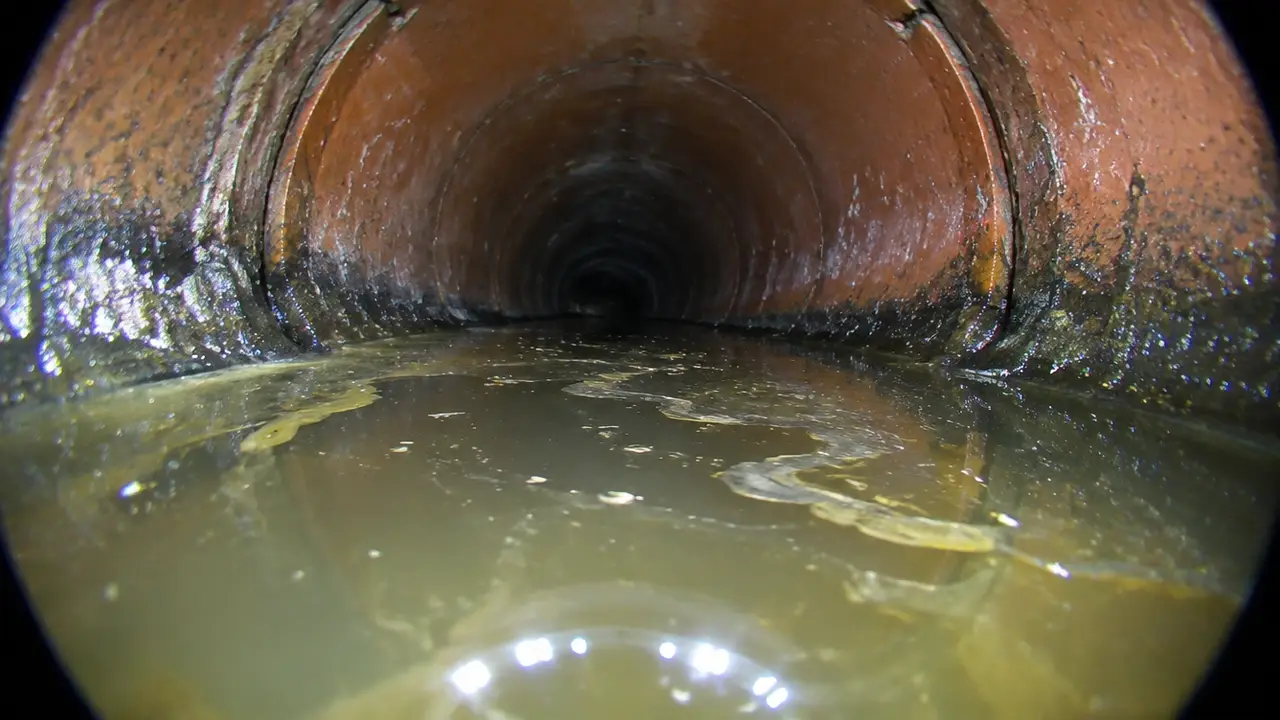
The immediate observation is water in the recorded view, with whatever parts of the pipe remain visible. Ask the inspector to describe that view and its location before interpreting the cause. The amount of wall hidden, the camera’s position and the surrounding footage affect what a reviewer can assess. A screenshot that looks dark or submerged should remain connected to the original recording rather than become a diagnosis on its own.
Request the recording interval, distance reference, entry and direction. Ask whether the condition was described during the survey and what the written report says about limitations. If an inspection follows clearing, cleaning or an active incident, retain that sequence with the file. The observation can be useful while still leaving an unresolved question about geometry, flow or the section beyond the obscured view.
02 /What does the term sewer belly mean?
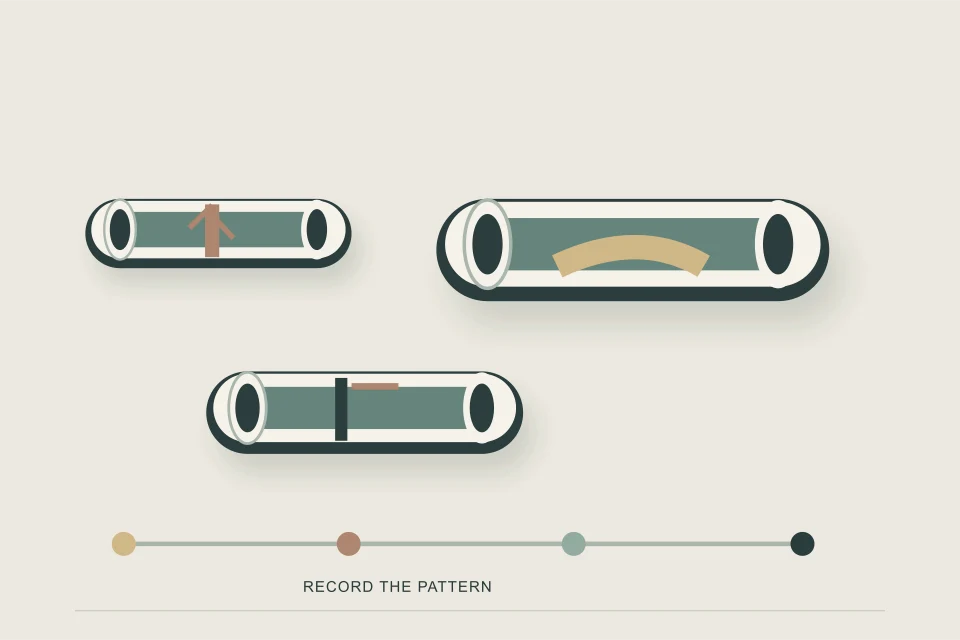
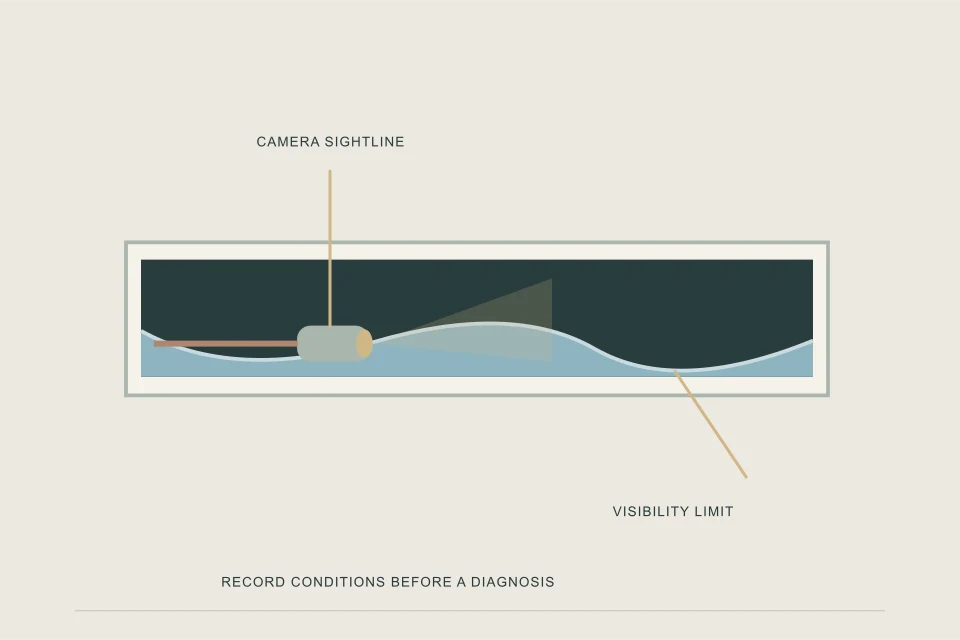
A sewer belly is a commonly used description for a low section that retains water along a gravity-flow route. The term should not replace the evidence supporting that interpretation. Ask what the inspector observed, how it identified the affected interval and which further measurements or assessment may be needed. The illustrative sag diagram explains a possible mechanism; it is not a profile survey of your property.
An image alone does not establish the exact grade, extent or cause of a suspected low area. Keep a statement of visible water separate from a concluded alignment concern. A qualified reviewer should explain which finding the record supports and what remains uncertain. If a proposal uses the term belly to justify repair, request the connection between the recorded interval, additional site information and the intended construction limits.
03 /Which questions make a water finding usable?
| Question | Evidence to request |
|---|---|
| Where is water visible? | Original interval and stated camera reference |
| What was hidden? | Wall, joints or route portions that could not be assessed |
| What were the inspection conditions? | Date, service sequence and relevant stated limits |
| What supports the interpretation? | Provider’s reasoning and any actual measurement |
| What remains unresolved? | Cause, extent or unseen remainder named explicitly |
| What would another task reveal? | Defined assessment purpose before approval |
These questions help the owner review the record without trying to measure grade from the screen. Missing information should remain a clarification item. A useful report can distinguish a supported observation from an unresolved interpretation. Do not rewrite uncertainty as proof that the route is either harmless or irreparable simply because you need a yes-or-no answer before obtaining the relevant evidence.
04 /How can visible water limit the condition assessment?
Water can limit the parts of the pipe wall and connections that the camera can record. Ask the inspector which observations remain supported and which sections cannot be assessed from that view. The existence of a video file does not mean a complete wall survey occurred. A report should retain visibility limits beside its findings, especially where a recommendation depends on a joint or surface the record does not clearly show.
If an appropriate further task is proposed to improve the view, ask what it is expected to reveal and how it is approved. Keep the existing record rather than discarding it when a later file is clearer. The two recordings describe different inspection conditions and should be dated. Do not provoke a backup, alter the system or run water to test an interpretation yourself; the provider should assess a suitable and safe investigative sequence.
05 /How should an owner connect the footage to symptoms?
Connect the footage to a documented history without treating association as proof of every cause. Record which fixtures were affected, when incidents occurred and what previous work restored passage. Ask whether the surveyed route matches that affected area. A visible water interval and recurring symptoms can be relevant together, but the report should explain the relationship and any part of the system that remains unexamined.
For an illustrative review, an owner might hold footage of water beyond a bend and invoices for clearing a different branch. Those records do not yet establish one common defect. The next useful question is whether they concern the same asset and whether another assessment can resolve the gap. Keep incident descriptions, recorded observations and proposed work as separate entries so the qualified reviewer can trace what is known rather than inherit an assumed diagnosis.
06 /Does a water finding determine the right repair method?
It does not choose a repair method on its own. Ask the qualified provider what condition the proposed work is intended to correct and which geometry, location or access information it needs. A surface-treatment or renewal label does not explain whether a suspected alignment concern is addressed. The proposal should connect its work limits to the actual evidence and identify any prerequisite assessment.
Keep pricing and suitability questions distinct from recognising water on video. If a provider recommends a larger scope, ask which additional finding supports it. If a second reviewer says the view is insufficient, request a focused next investigation rather than treating that limit as a complete disagreement about construction. A camera survey can document an observation without supplying every external site condition a repair contractor needs.
07 /What should an existing-footage reviewer receive?
Send the original quality recording, written report, relevant interval and the exact recommendation you want considered. State the date and any subsequent cleaning, repair or new incident. Ask the reviewer to separate the visible finding from the interpretation and whether the old record answers a current-condition question. An edited clip or phone photograph of a monitor may omit context that matters to the assessment.
Provide the entry, direction and distance reference where available. If a locate or measured profile was part of the original work, include that record separately rather than implying the camera image itself supplies it. The reviewer may confirm a visible concern or identify a missing fact. Retain the response’s scope and limits beside the video so it is not later presented as an unrestricted assessment of every pipe at the property.
08 /How do you ask for the next useful inspection task?
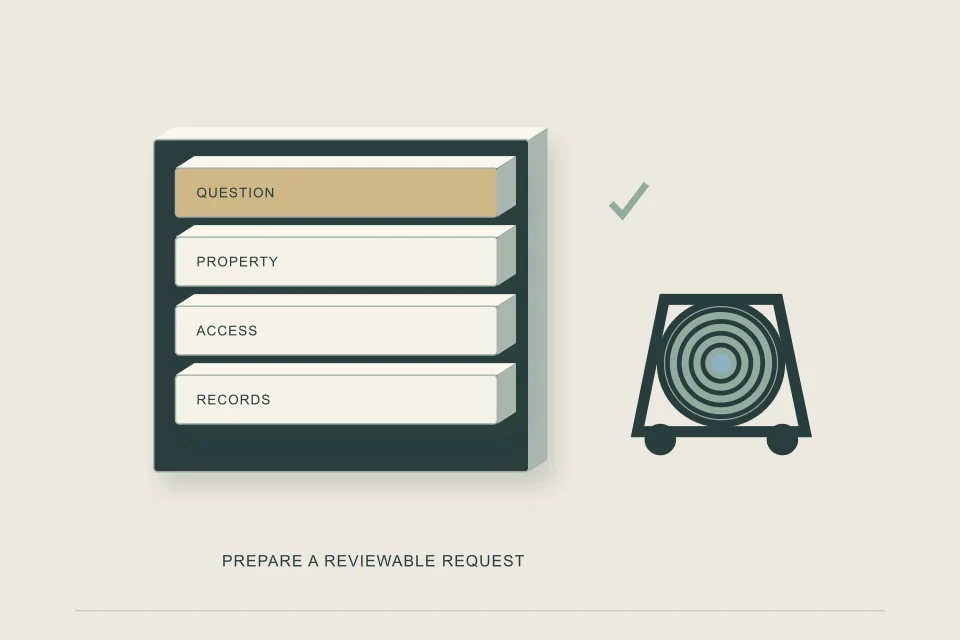
Use the inspection scope builder to state whether the purpose is recurring symptoms, existing footage or a repair review. In the private form, describe the water observation, files held and decision deadline without guessing the cause. Ask the responding provider which assessment would materially improve the decision and what record it will deliver. Selecting the animated example does not evaluate your video or reserve a visit.
Keep the original route limits and unresolved portions in the final enquiry. The provider must confirm practical access, capability and terms before the owner authorizes another task. NASSCO assessment and quality references support asking for a defined professional record; this portal does not diagnose an alignment condition remotely or issue a measured grade report from automated chat. Clear questions can be actionable even while the cause remains unconfirmed.
FAQQuestions people ask
Does water in the image always prove a sewer belly?
No. Ask the inspector what the recording shows and what evidence supports that interpretation. Keep the interval, viewing conditions and stated limits with the finding. A camera image alone is not a complete grade or route assessment. A qualified provider should explain any additional information needed before selecting the next investigation or repair.
Can the hidden wall be considered inspected?
The report should state what could and could not be assessed under the actual view. If water obscures a wall or connection, retain that limitation. Useful observations elsewhere in the file do not automatically establish condition behind the obscured area. Ask what further task could reveal the specific missing evidence and what its scope would be.
Should I run more water to test the suspected low area?
Do not provoke a backup or change the system to make a recording. Discuss an appropriate investigative sequence with the qualified provider. During an active incident, seek suitable urgent assistance and keep people clear of affected wastewater and wet electrical equipment. A planned question can be addressed after the immediate situation allows a safe survey.
Can lining fix every water-retaining section?
Do not infer suitability from the method name. Ask the provider what condition it intends to address and whether the proposal changes the relevant geometry or leaves a concern unresolved. The actual route, access and evidence matter. A generic liner illustration or a water screenshot is not a project-specific repair design.
NETWORKGo deeper across the HAUSE Sewer network
Sewer Maintenance Planner
Sewer Maintenance Planner: a suggested cleaning and camera inspection interval plus a 12-month checklist based on your house, pipes, trees and history.
SewerInspector.caSewer camera inspection certification and training: what it proves
Sewer camera inspection certification and training in Canada: NASSCO PACP and LACP, home inspector courses, safety training and what a credential proves.
SewerRoots.caWhat tree roots in a sewer line look like, on camera and on the cable
What tree roots in a sewer line look like on camera: fine roots, tap roots and root balls, PACP codes, look-alikes like grease, and what cut joints show.